|
|
|

|
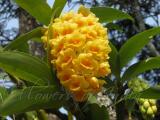
Melei Leishna ꯃꯦꯂꯩ ꯂꯩꯁꯅꯥ (Dendrobium densiflorum) -- Pineapple Orchid
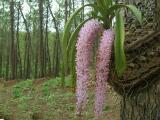
"Samjirei", also known as the Foxtail Orchid, is a beloved flower in Manipur, adorning trees and flower pots, blooming in various seasons. The long, flowing clusters of flowers are considered perfect for decorating women's hair, and that is the meaning behind its name. This flower is recognized for its long, cascading clusters of blooms. Although it is not the main focus of many famous poems, it is referenced in relation to Manipuri culture and nature, often alongside other orchids such as Kwaklei and Yerumlei. The orchid's beauty and distinctive look have influenced its local name and its depiction in descriptions of Manipur's natural scenery. Yerum lei ꯌꯦꯔꯨꯝ ꯂꯩ ( Dendrobium nobile) -- Noble Dendrobium
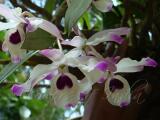
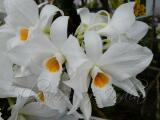
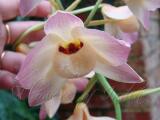
Yerumlei literally translates to "Egg-Flower" because its tight, half-open blossoms or buds resemble pristine white eggs. The Yerumlei narrative belongs to the distinctive Meitei genre in which rare or notable flowers become the subjects of ballads. These songs function not merely as entertainment but also as carriers of cultural knowledge and beliefs. in Leithak Leikharol the Yerum lei is noted for its visual traits—its vibrant coloration resembling the yoke and white of an egg. Khonggumelei ꯈꯣꯡꯒꯨꯃꯦꯂꯩ (Dendrobium chrysotoxum) -- Golden Arch Dendrobium
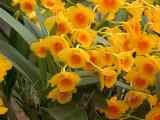
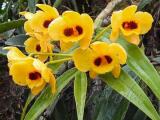
The story of Khonggumelei started with a daring proposal in 1469 AD: King Khekhomba of the Shan Kingdom (in Myanmar) asked the Meitei king Kyamba to unite and conquer Kyang, a crucial area for trade and power in what is now Myanmar. To formalize their agreement, Khekhomba sent a bouquet of Khonggumelei orchids to Manipur, their golden petals shining with hope. Known for their purity and strength, the orchids were divided equally - one part for Kyamba and the other for Khekhomba. Their alliance would come to life when new stems blossomed, a poetic bond that connected their destinies to the orchid’s fragile growth. In the royal gardens of Manipur, nourished by the Imphal River, and in the misty hills of Pong, the Khonggumelei was cared for with optimism, its expected bloom a common aspiration. Initially, different blooming seasons in varying climates caused some worry on both sides. However, the orchid eventually became a symbol of patience, leading the Meitei and Shan to a shared victory over Kyang in 1470 AD. Kongyamba Lei ꯀꯣꯡꯌꯥꯝꯕꯥ ꯂꯩ (Arundina graminifolia) -- Bamboo Orchid
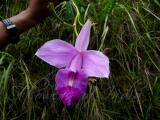
"Kongyamba lei" or Bamboo Orchid, is a plant with grand rosy pink flowers which are 5-8 cm across. Probably the magestic appearance of the flowers is what inspired the name Kongyamba, which likely refers to Nongban Kongyamba in the famous epic of Khamba-Thoibi, a nobleman of Angom clan, serving as a courtier of the king of Moirang, and a suitor of princess Thoibi, for which he rivaled Khamba. Thoibi was actually in love with Khamba instead, and wanted to marry him. Eeyong Lei ꯏꯌꯣꯡ ꯂꯩ (Dendrobium infundibulum) -- Funnel Lip Dendrobium
In the Meitei language, "Eyong" refers to the traditional handloom or the art of weaving, while "Lei" means flower. Local folklore and traditional wisdom draw a parallel between the intricate, delicate white petals of the orchid and the beautiful, fine textures of hand-woven Manipuri silk and cotton fabrics (such as Wangkhei Phee or Rani Phee). Thus, the flower is culturally celebrated as the "weaver's flower." |
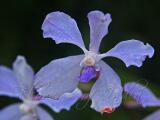
Kwak Lei ꯀ꯭ꯋꯥꯛ ꯂꯩ (Vanda coerulea) -- Blue Vanda
"Mera Leikham" pertains to the month of "Mera" (October-November) in Manipur, and these are the months in which this orchid is in full bloom. Kwaklei Angangba ꯀ꯭ꯋꯥꯛꯂꯩ ꯑꯉꯥꯡꯕꯥ (Renanthera imschootiana) -- Red Vanda
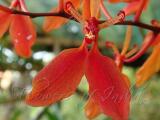
"Kwaklei Angangba", or the Red Vanda, is a flower that is featured in several folk tales from the region of Manipur and surrounding areas. These tales often involve themes of nature, magic, and the connection between humans and the natural world. The vibrant red color of the Kwaklei Angangba flower often symbolizes power and beauty in Manipuri folklore. In essence, Kwaklei Angangba in folk tales serves as a powerful symbol, bridging the gap between the natural world and the human experience, often embodying themes of love, loss, magic, and the enduring power of nature. Nachom Lei ꯅꯥꯆꯣꯝ ꯂꯩ (Vanda karinae) --Manipur Orange Vanda
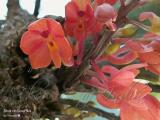
In Manipuri culture, "Nachom" or "Nachom lei" is a traditional floral ornament, essentially a small bouquet or posy, primarily worn by women of the Meitei community. It's more than just an adornment; it holds cultural, religious, and romantic significance in Meitei society. The way it iss worn can even indicate a woman's relationship status. For example, wearing a Nachom on the left ear signifies that the woman is single, while wearing it on the right indicates she is committed or married. The flower of this orchid is considered perfect for wearing as a nachom, hence its local name. Ingellei, Engellei, Ingalei ꯏꯉꯦꯜꯂꯩ (Dendrobium moschatum) --Musk Dendrobium
The Engellei/Ingellei flower is a traditional flower that is associated with the month of June. It's famous for its captivating look and is thought to bloom during the early part of Ingel (June-July). It is linked to the goddess Phou-oibi and the Tangkham Lou Hillock in Awang Koubru, which is a revered site for the people of Manipur. "Chingda Satpi Engellei" is a folk song from Manipur, meaning Engellei that blooms on the hill. It was passed down from generation to generation orally. The song employs the flower as a symbol, expressing sorrow that it fades away without decoration, similar to how a young woman's beauty can be overlooked without love or recognition. Thenggu Lei ꯊꯦꯡꯒꯨ ꯂꯩ (Dendrobium jenkinsii) --Jenkins's Dendrobium
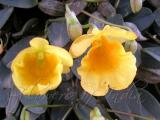
Thenggu (ꯊꯦꯡꯒꯨ) means tortoise or turtle in Meitei language. To ancient observers and traditional artists in Manipur, this tightly packed cluster of hard, flattened green pseudobulbs closely mirrored the overlapping scales or the hard, rounded shell of a tortoise resting on a tree trunk. When spring arrives (usually around March–April), bright golden-yellow flowers bloom from the base of these "shells," creating the striking image of flowers emerging from a tortoise cluster. | ||||||||||||||||||||||||||||||||||||||||||||||||||||||||||||||||||||||||||||||||||||||||||||||||||||||||||||
| Send comments to flowersofindia@gmail.com |
 Under construction